Most companies think a K-12 conference offers two options: pay for a booth, or don’t go. There’s a third option almost nobody budgets for, and it’s often the better one. Skip the booth, register as a participant, and show up to be useful in the room instead of waiting behind a table for the room to come to you.
This is the third piece in Midday Advisors’ series on K-12 conference ROI. The first two pieces covered how to get the most out of exhibiting, locking meetings before you travel and landing a real speaking slot. This piece asks a more basic question: does the booth need to happen at all.
Why Does Booth Squatting Waste So Much of the Trip?
A ten-by-ten booth at ISTE or FETC runs fifteen to twenty thousand dollars once travel, lodging, entertainment, and collateral are added in. Attending as a participant instead, badge on, no booth, costs closer to two thousand dollars, registration, travel, and a hotel room, nothing else. That gap alone should make a company ask whether the booth is buying anything the participant badge couldn’t buy for a fraction of the price.
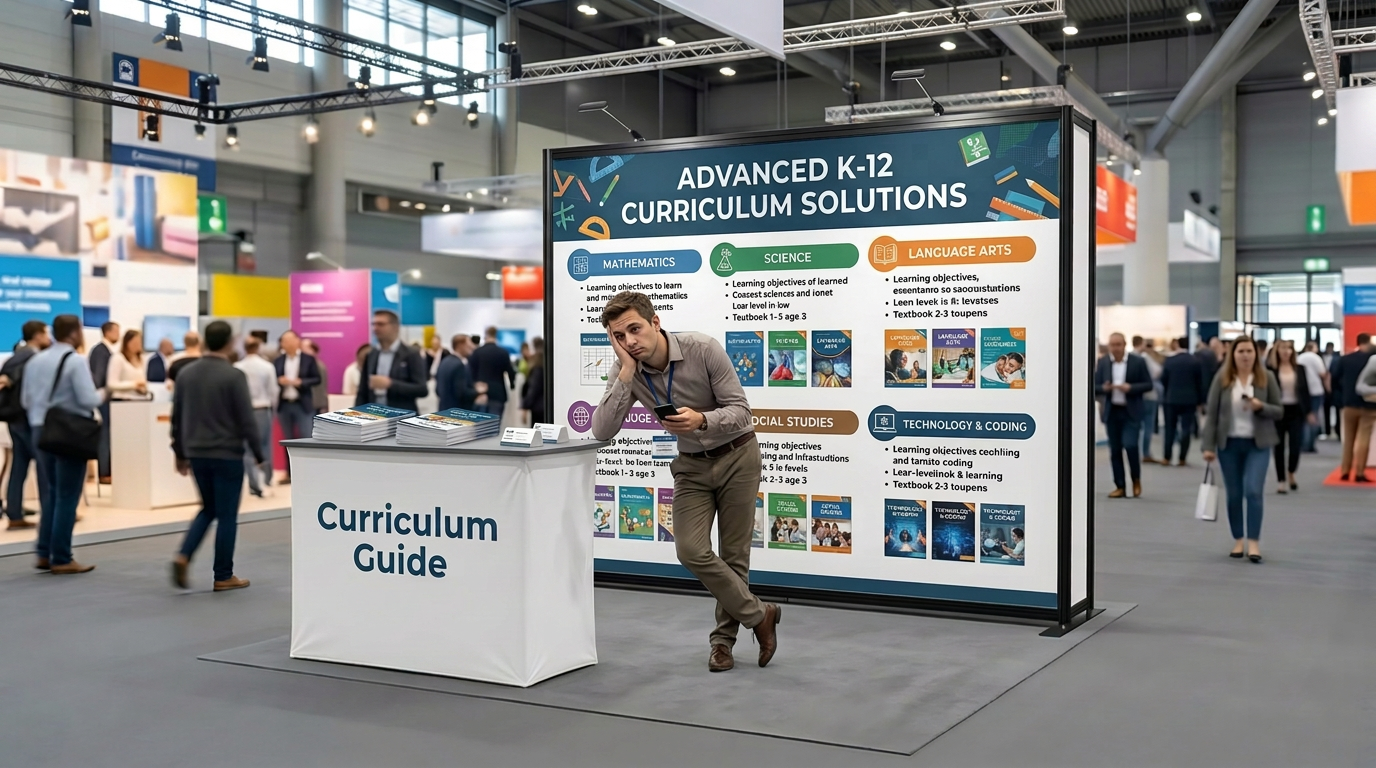
Here’s what the booth actually buys: a fixed location and the hope that the right person walks by it. That’s booth squatting, standing behind a table, waiting, while a badge scanner does the only active work happening at the whole setup. It feels like presence. It’s closer to being furniture.
The senior buyers a company most wants to meet have already learned to avoid this exact setup. Most experienced superintendents and curriculum directors treat unstructured floor time as something to minimize, not something to walk through looking for booths, because unstructured time on a show floor means fielding pitches from vendors who don’t know them. They’re in the sessions. They’re in the hallway conversation after the session ends. They’re at dinner with someone they already trust. A company staffing a booth and waiting for that exact person to wander by is waiting for someone who has specifically trained themselves not to.
The Participant Play
Call it the Participant Play: skip the booth, keep the badge, and treat the whole conference as the surface area instead of one ten-by-ten patch of it. A branded polo shirt is still worth wearing, the company doesn’t disappear just because the booth does. But the actual work changes completely. Go to the sessions instead of skipping them to staff a table. Listen instead of pitching. Offer a genuinely useful observation in a Q&A or a hallway conversation instead of waiting to be asked what the product does. Meet people in the hallways between sessions, where the conversations that actually move a relationship forward tend to happen anyway.
This isn’t a replacement for the confirmed-meetings list from the first piece in this series, it’s what happens around it. The AE who’s already locked meetings before boarding the plane still has that calendar. The Participant Play adds unscheduled dinners and hallway conversations on top of those confirmed meetings, not instead of them, more surface area for a trip that’s already justified before it started.
What About Companies That Keep the Booth?
Some companies aren’t ready to skip exhibiting entirely, and that’s a real choice, not a failure to absorb this argument. For those companies, the fix is smaller but still matters: staff the booth with marketing, not sales. Booth duty is lead-scanner work, standing, waiting, occasionally answering a question from someone who wandered by. That’s a reasonable use of marketing’s time on the floor. It’s a poor use of an AE’s time, since an AE’s real value that week is in a session, a hallway conversation, or a meeting they booked weeks in advance.
A company running both plays at once, a staffed booth for visibility and lead capture, and AEs freed up to run the Participant Play around it, gets the benefit of both without asking the highest-cost person in the building to spend four days waiting behind a table.
That combination, minimal booth commitment paired with maximum participant engagement, usually outperforms a fully staffed booth with nobody actually working the room. The company spending less money often walks away with more real conversations, because the money it didn’t spend on the booth bought something better: the freedom to be everywhere instead of standing in one place.
Who stands behind the table is a sales and marketing question, not a staffing question. When marketing owns the booth and sales owns the room, each team spends its hours where they’re worth the most. The Guide to K-12 sales and marketing alignment covers how to draw that line. If you’re rethinking where your conference budget goes, see how Midday Advisors helps K-12 education companies.
If your organization is dealing with a version of this, let’s talk.
Scott Noon is the founder of Midday Advisors, a K-12 go-to-market advisory firm.
Frequently Asked Questions
No. Attending as a participant, without a booth, costs a fraction of exhibiting and can produce more real conversations, especially with senior buyers who tend to avoid the exhibit hall.
Roughly two thousand dollars for registration, travel, and lodging, compared to fifteen to twenty thousand dollars for the smallest booth presence.
Marketing, not sales. Booth duty is lead-capture work, and it’s a better use of marketing’s time than an AE’s, whose time is worth more in a session or a confirmed meeting.
Unstructured floor time means fielding pitches from vendors who don’t know them. Superintendents and curriculum directors with real budget authority are more often in sessions, scheduled meetings, or dinners with people they already trust.